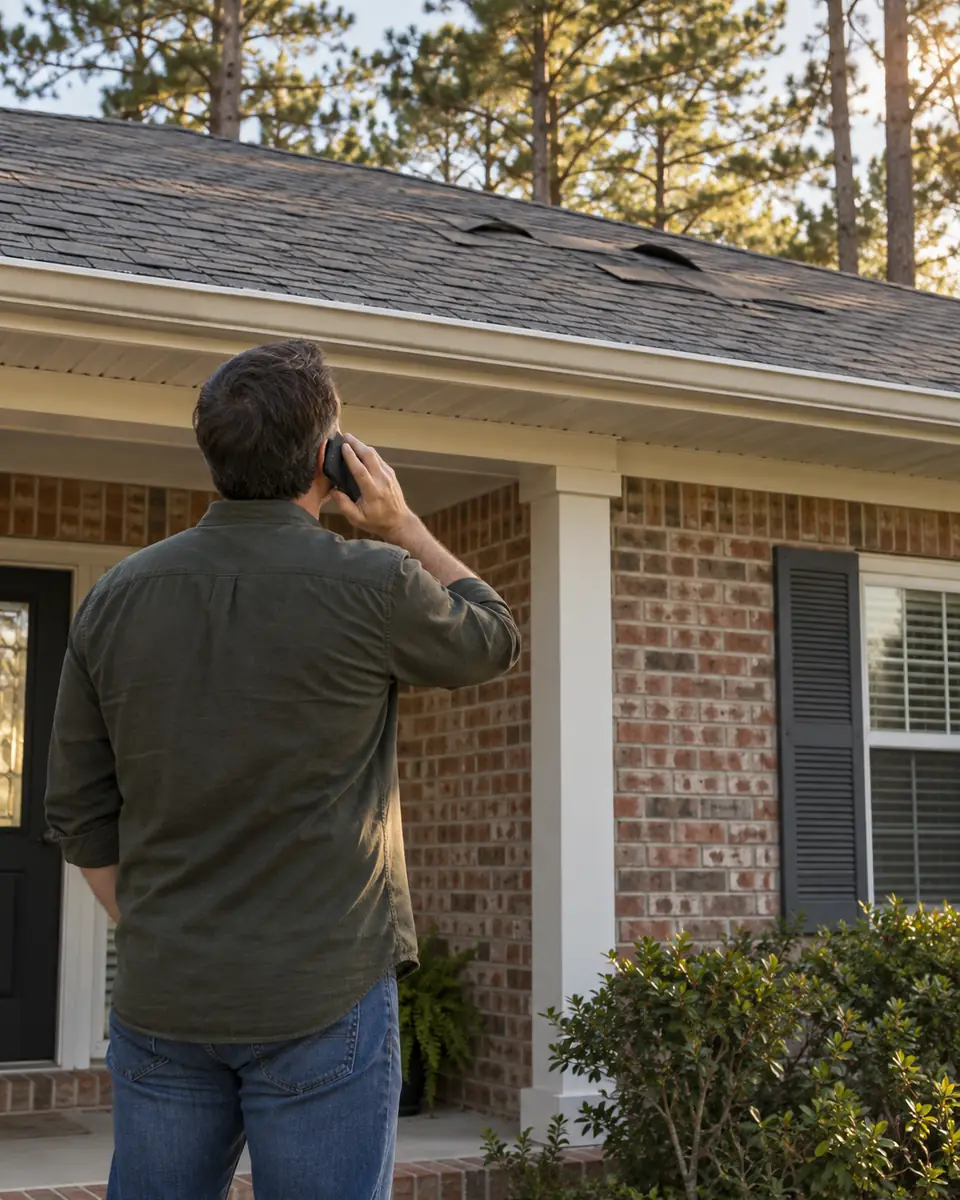
Before you dial
Start with safety. Stay off a roof that is wet, damaged or steep, keep away from a sagging ceiling or any downed line, and put a bucket under an active drip. Then gather the few details that make the first conversation useful:
- the full street address, including the city or whether it is outside city limits
- what you see and where: a ceiling stain in which room, shingles in the yard, a lifted edge
- when it started, and whether it followed a storm or heavy rain
- the roof's approximate age and material, if you know them
- an insurance claim number, if you have already filed
A photo taken from the ground helps, but do not delay a safety step to take one.
What happens on the call
Call, describe what you are seeing, and one of our local licensed roofers will take it from there. Give the exact street address rather than only the town, so the inspection is planned for the right place. Your roofer arranges an inspection and explains what they found and what they recommend: a temporary cover, a repair, a closer inspection or a replacement estimate.
Questions to ask your roofer
- When can you come out, and what will the first visit include?
- Can you send current certificates for liability and workers' compensation insurance?
- Who will inspect the roof, and who will do the work?
- Will the estimate be in writing, and does it separate emergency covering from the permanent repair?
- Which permit office covers my address, and who files the permit?
- What does your workmanship warranty cover, and for how long?
The choosing a roofer guide explains why each answer matters.
If insurance is involved
Contact your insurer as well as your roofer, and ask the insurer whether it wants to see the damage before any permanent repair. The insurer decides what the policy covers and pays; your roofer can document the roof and quote the work. Alabama does not license or recognize public adjusters, so be careful with anyone who offers to take over the claim for a fee. The insurance claims page covers what the state insurance department tells policyholders to document.
Before you agree to work
Ask your roofer for the written scope, payment schedule and warranty terms, and keep copies of estimates, photos, receipts and messages together. If the roof is old or has been patched before, ask whether the inspection covered flashing, pipe boots, ventilation and decking, not only the spot where water appeared. A clear question at the start avoids a disagreement later about what the price included.
Keep the first agreement specific
Ask your roofer to state whether the visit covers leak tracing, a temporary cover, a written replacement quote, a FORTIFIED evaluation route or a combination. On the call, give the address and go over the expected inspection window, the cost of the first visit and any permit question. For FORTIFIED work, the roofer and the independent evaluator have different roles; any grant or insurer payment is decided by the program or the insurer.