
The short version
- Before June, check roof edges, flashing, gutters, downspouts, and nearby limbs from safe positions.
- Photograph the roof and exterior before a storm so later changes are easier to describe.
- When a storm passes, stay off damaged surfaces and call with visible facts rather than guessing the repair.
The season gives you a preparation date
NOAA’s National Hurricane Center defines the Atlantic hurricane season as June 1 through November 30, while tropical systems can occur outside those dates. The calendar is a reminder to inspect and document the roof before a storm, not a prediction that a particular Eastern Shore home will be damaged. Gulf Coast weather can change quickly, so preparation should focus on safe observations and clear records.
Start before a forecast is issued. A loose shingle, open flashing joint, clogged gutter, or limb over the roof is easier to address when the weather is calm. Do not walk a steep, wet, or fragile roof. Use ground-level views, a window, an attic access point, or a qualified inspection instead.
Check the roof edges and openings
Look from the ground for lifted or missing shingles, damaged metal panels, loose ridge material, open seams, and visible flashing gaps around vents, chimneys, walls, and roof-to-porch connections. In a coastal or bay-facing setting, ask about exposed metal, fasteners, and flashing because moisture and salt-laden air can increase corrosion concerns. The visible condition does not prove what is happening below the covering.
If a ceiling stain appears during ordinary rain, note the room and weather rather than waiting for a tropical system to confirm it. Wind-driven rain can enter around flashing and roof openings even when the main field of shingles looks intact. Use roof leak repair for a current symptom and ask your roofer what they will inspect.
Clear drainage and manage nearby limbs
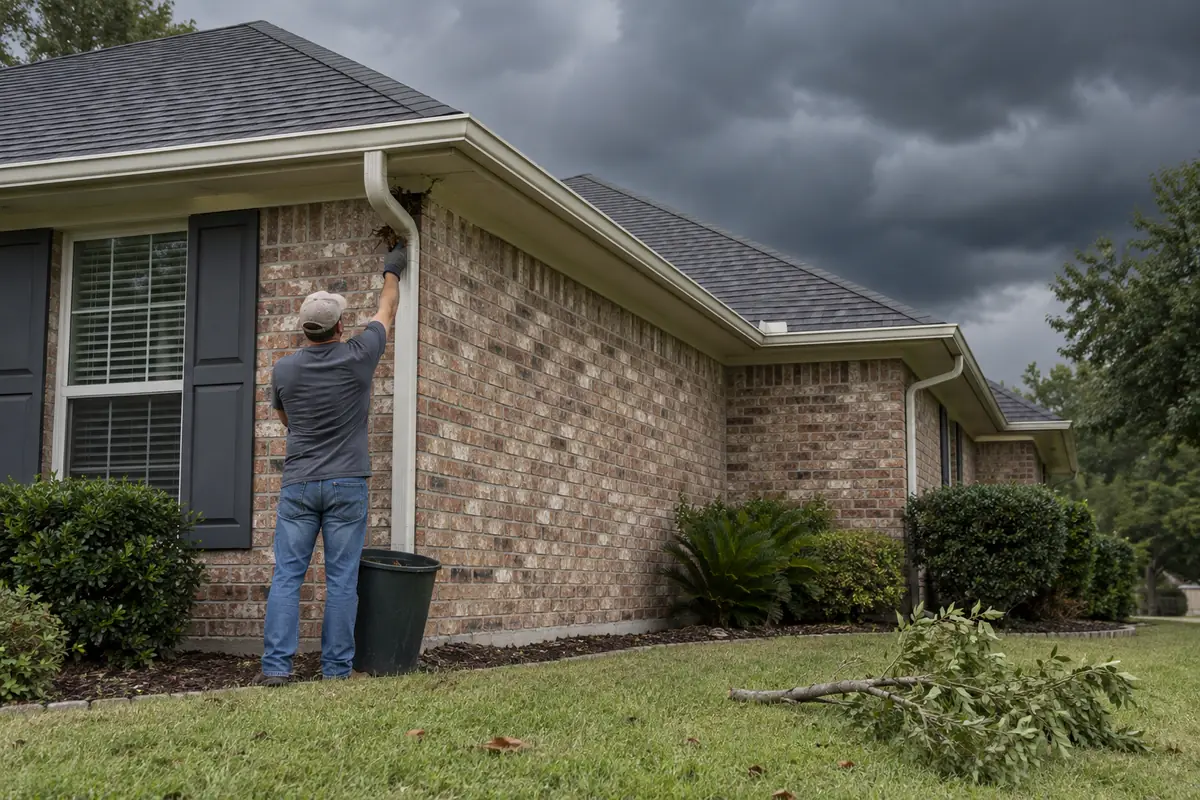
Gutters and downspouts can overflow when leaves, pine needles, or roof granules block the path. Clear what you can reach safely from the ground or a stable low position, and do not lean a ladder against a damaged gutter or roof edge. Confirm that downspouts discharge away from the structure where the property design allows.
Trim or arrange professional help for limbs that rub against the roof or can fall onto it. Do not climb near power lines, and do not attempt storm-tree work during wind or rain. Your roofer can explain roof damage, but tree removal, electrical hazards, and structural concerns may require another qualified service.
Photograph the baseline before weather arrives
Take wide photos of each roof plane that can be seen safely, plus close photos of flashing, gutters, vents, and existing wear. Photograph the exterior elevations, attic stains, and any prior repair area. Keep the date and a short note with the images. This record does not prove a claim, but it helps distinguish an old condition from a new observation.
Do not create a false record by moving materials or cleaning away visible evidence. An insurer may have its own claim instructions. If you hire a roofer for a pre-storm inspection, keep the written findings and ask what remains outside the inspection’s scope.
Check the policy before June
Read the declarations pages while the weather is calm. Note the wind, hail or hurricane deductible, which the Alabama Department of Insurance says is often a dollar amount or a percentage of the home's insured value. Check whether wind is covered on a separate policy and whether you bought a FORTIFIED roof endorsement, which Alabama insurers must offer on coastal policies. Keep the insurer's claims phone number and a copy of the policy outside the house, as the department's guide suggests.
When a storm is forecast
Follow official emergency instructions first. Bring loose outdoor items inside or secure them as local guidance allows, keep vehicles and people away from damaged roof areas, and make sure you can reach important documents and medication. Do not begin a roof repair in rising wind or rain. A tarp or temporary measure should be installed only by someone who can do it safely and appropriately.
Keep your roofer’s information and insurer contact with your storm plan. If you rent, notify the property owner or manager. A storm warning is not a reason to sign a rushed contract, promise a claim outcome, or pay for work you do not understand.
When the storm has passed
Wait for official all-clear and safe ground conditions. From the ground, photograph missing shingles, exposed underlayment, punctures, fallen limbs, damaged flashing, standing water, and indoor stains. Keep away from sagging ceilings, downed lines, exposed wiring, unstable trees, and roof sections you cannot reach safely.
Hurricane Sally made landfall at Gulf Shores on September 16, 2020, as a strong Category 2 storm, according to the National Weather Service in Mobile, sixteen years to the day after Ivan came ashore just west of Gulf Shores. That history explains why coastal preparation matters; it does not predict the condition of a Daphne, Fairhope, Spanish Fort, or Foley roof after the next storm. Describe what changed at the exact address and contact the insurer if a claim may be involved.
Ask for an inspection with a clear scope
Tell your roofer the address, roof material if known, what you saw before and after the storm, whether water entered, and whether there are visible hazards. Ask who will inspect, what temporary protection means, and what the written scope includes. Your roofer goes over timing, price, warranty terms, and the work itself with you.
If you want to ask about FORTIFIED, say so directly. IBHS requires a trained contractor, an independent evaluator, and documentation review for a designation. It is a resilience pathway, not a promise that a roof will avoid all storm damage. Check the current official program information before relying on a claim.
The safest preparation is a calm record, clear drainage, controlled tree risk, and a conversation with your roofer based on what the roof actually shows. For vetting questions after a storm, see how to choose a roofer.